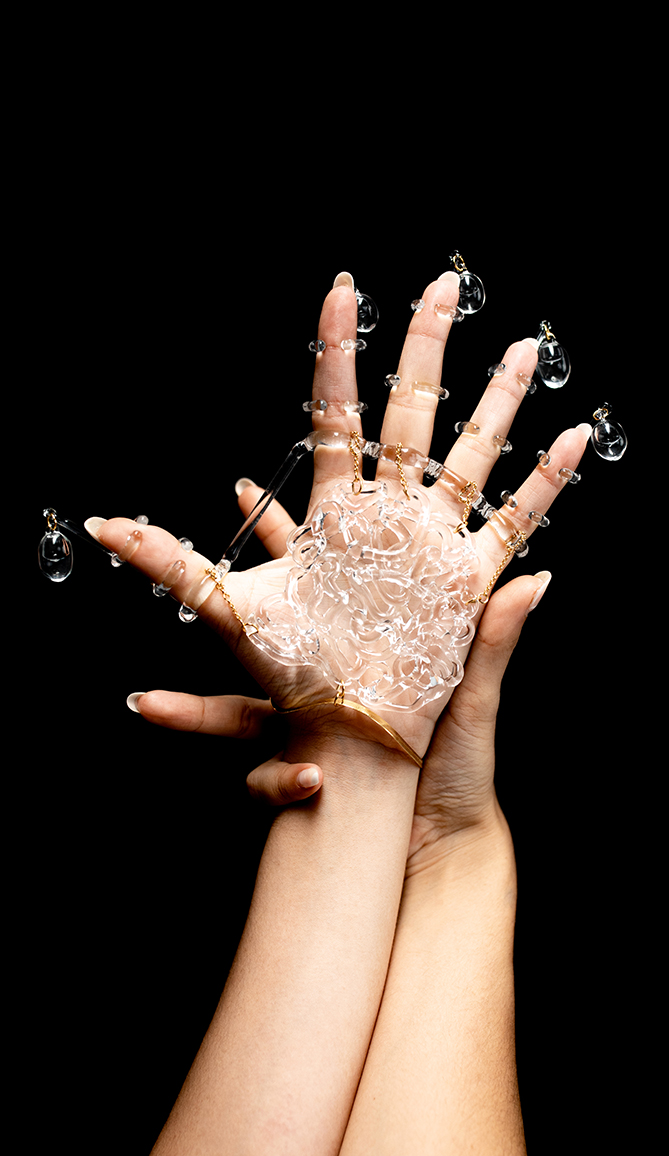
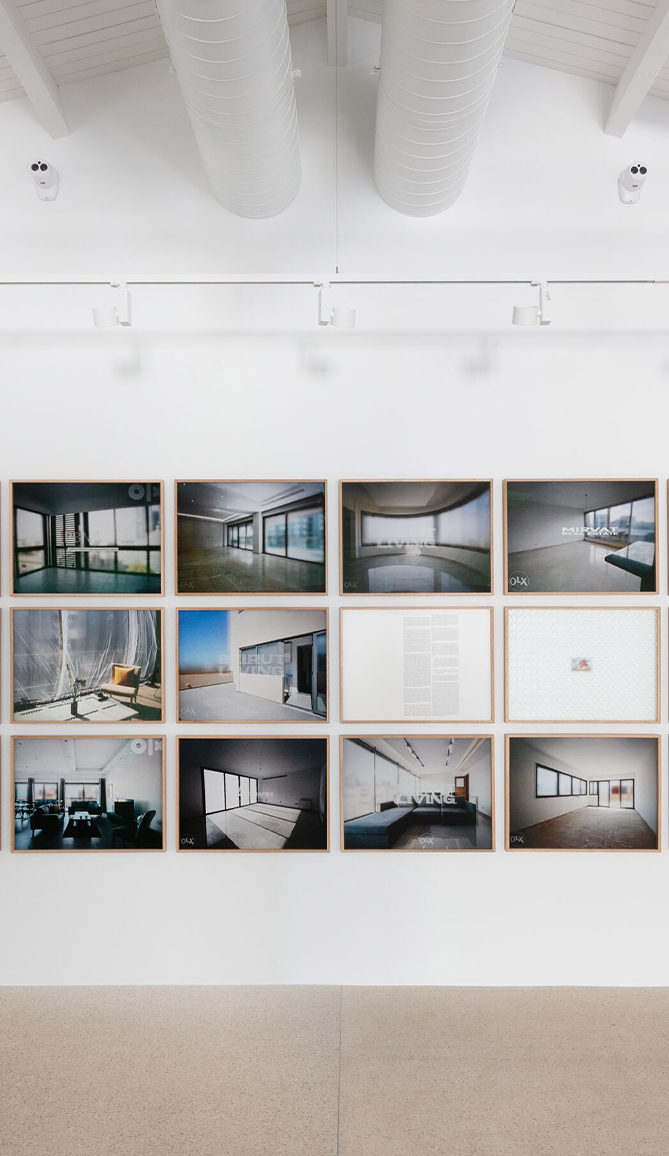

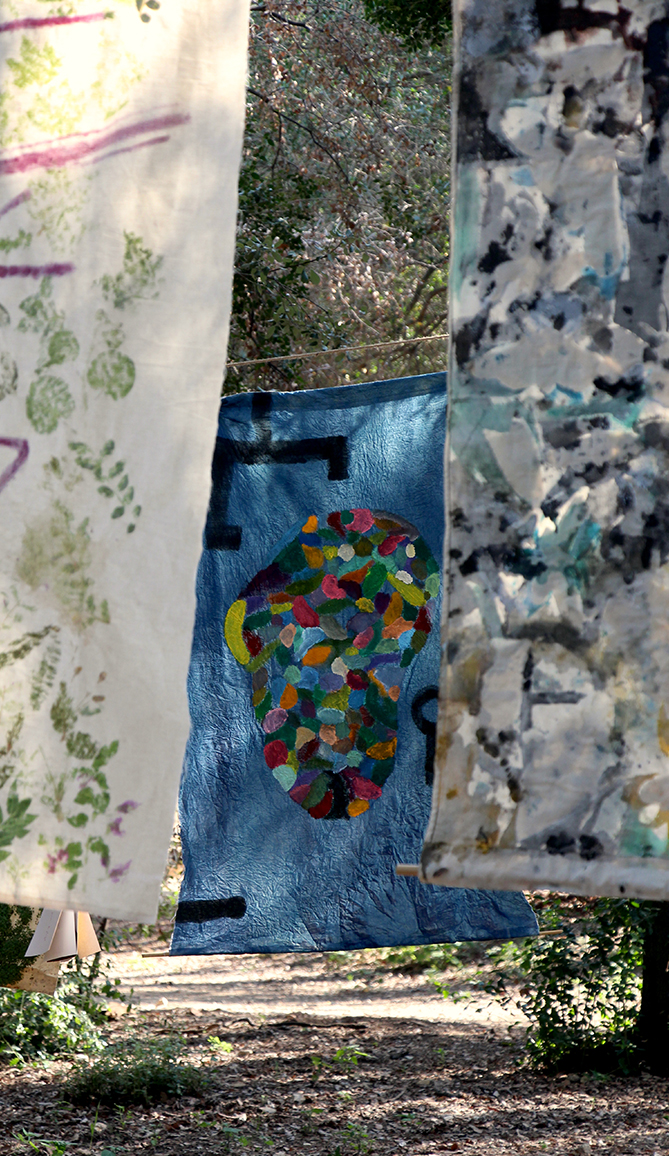

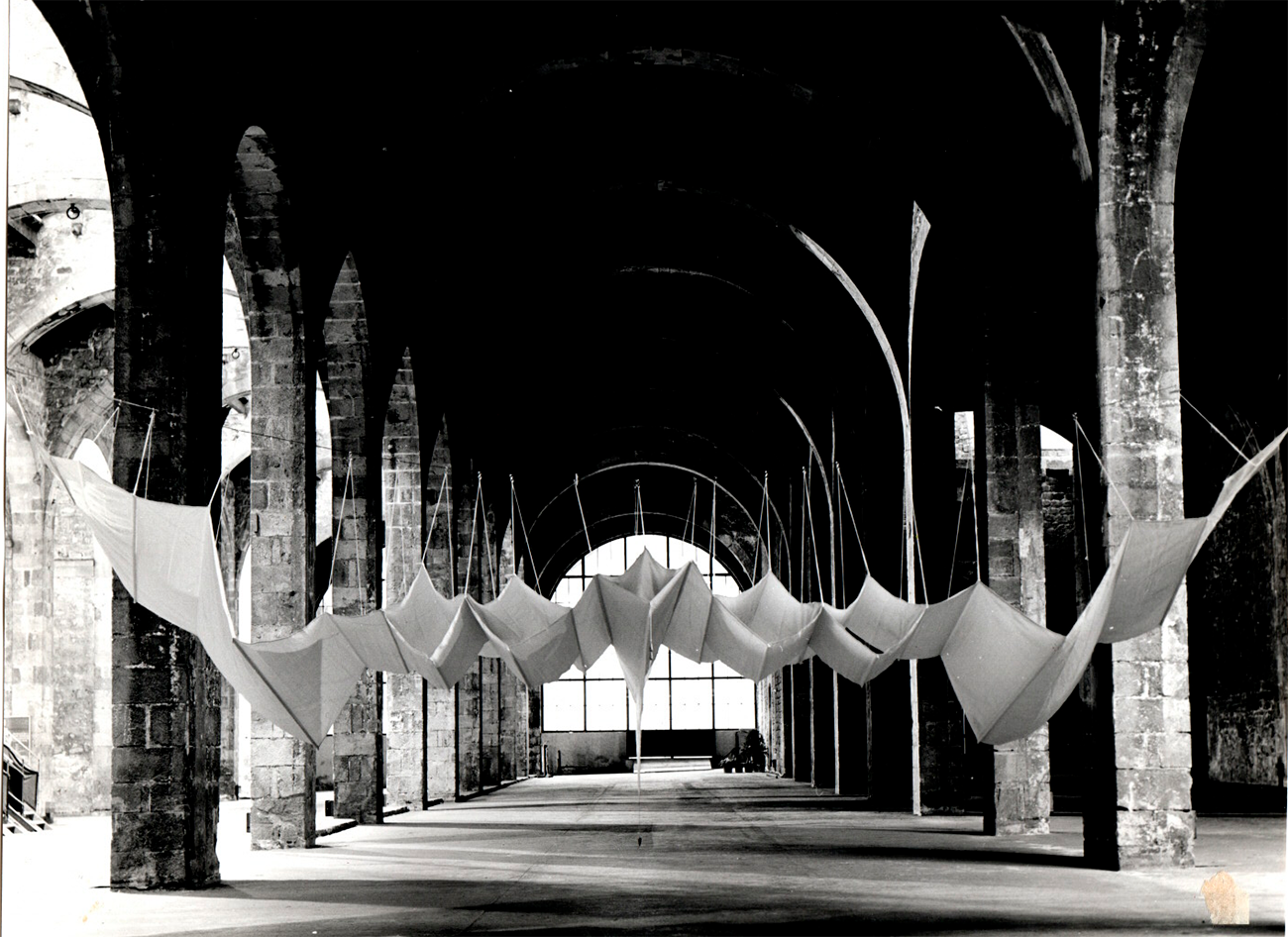
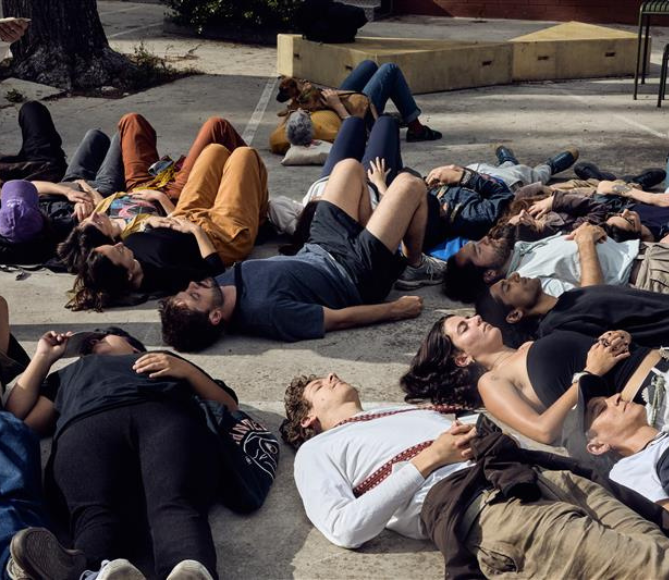

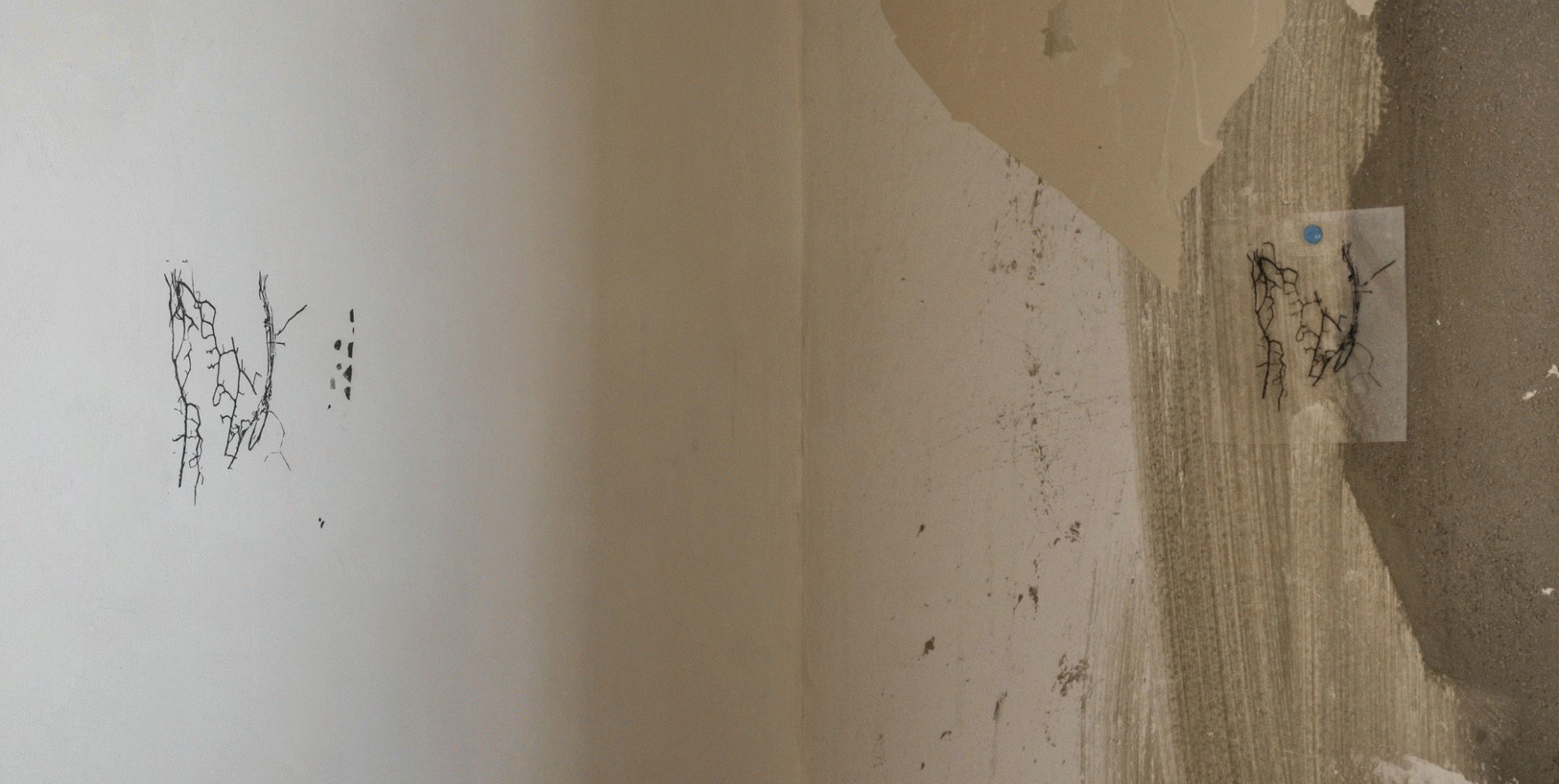
Conceived by artist Julia Spínola, this intervention takes as its starting point a material research: between sculpture, memory, and graphic processes (specifically screen printing, though only as a culmination). The collaboration with a group of students from Eina took place over three months and coincided with various phases of the construction and renovation of Eina Bosc. The group worked to create images from elements found in various spaces of the building and its surroundings: ropes, leaves, nails, cables, branches, rubble, pieces of walls, bolts, nuts or mineral residues. They form faces, symbols —sometimes recognizable and sometimes undecipherable—, readymade inscriptions, unfolding into three-dimensional drawings, ephemeral assemblages. These were scanned and transferred to a two-dimensional format which was adapted to the screen printing photoliths commonly used in the Eina workshop; finally, they were transferred onto the walls of the building using direct screen printing. Beyond projecting ideas onto architecture, this was also a process of transfer between spaces: from Eina Barra de Ferro, which was home to the screen printing workshops; to Eina Sentmenat, where some of the work sessions took place; and finally to the imminent space of Eina Bosc, where the project is now realized. Similar to tattoos, these marks (36 in total) are still visible in many parts of the building, from the ground-floor bathrooms to the printmaking workshop and the tower.
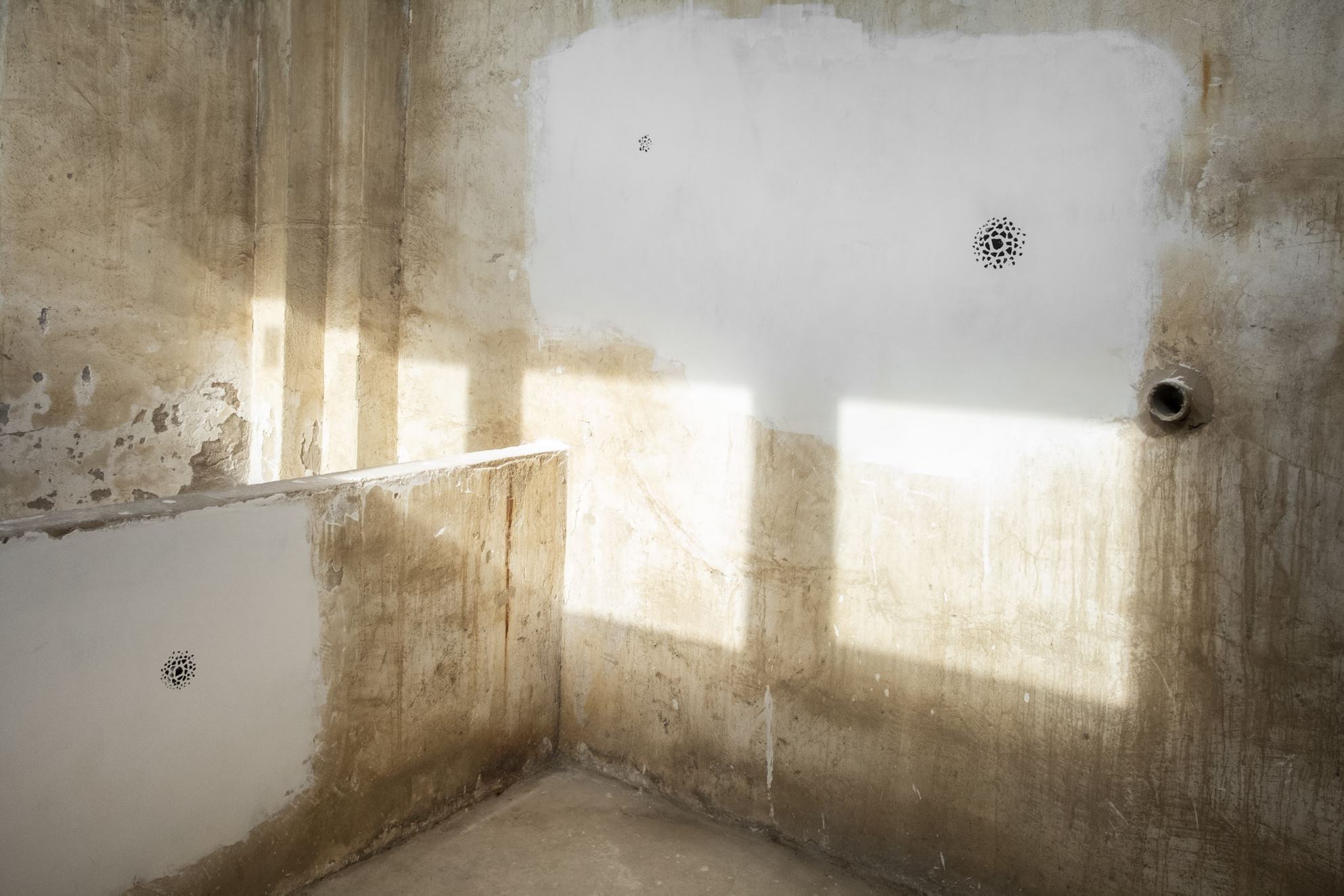 Ambush #3: Julia Spínola, photo by Natàlia Cornudella
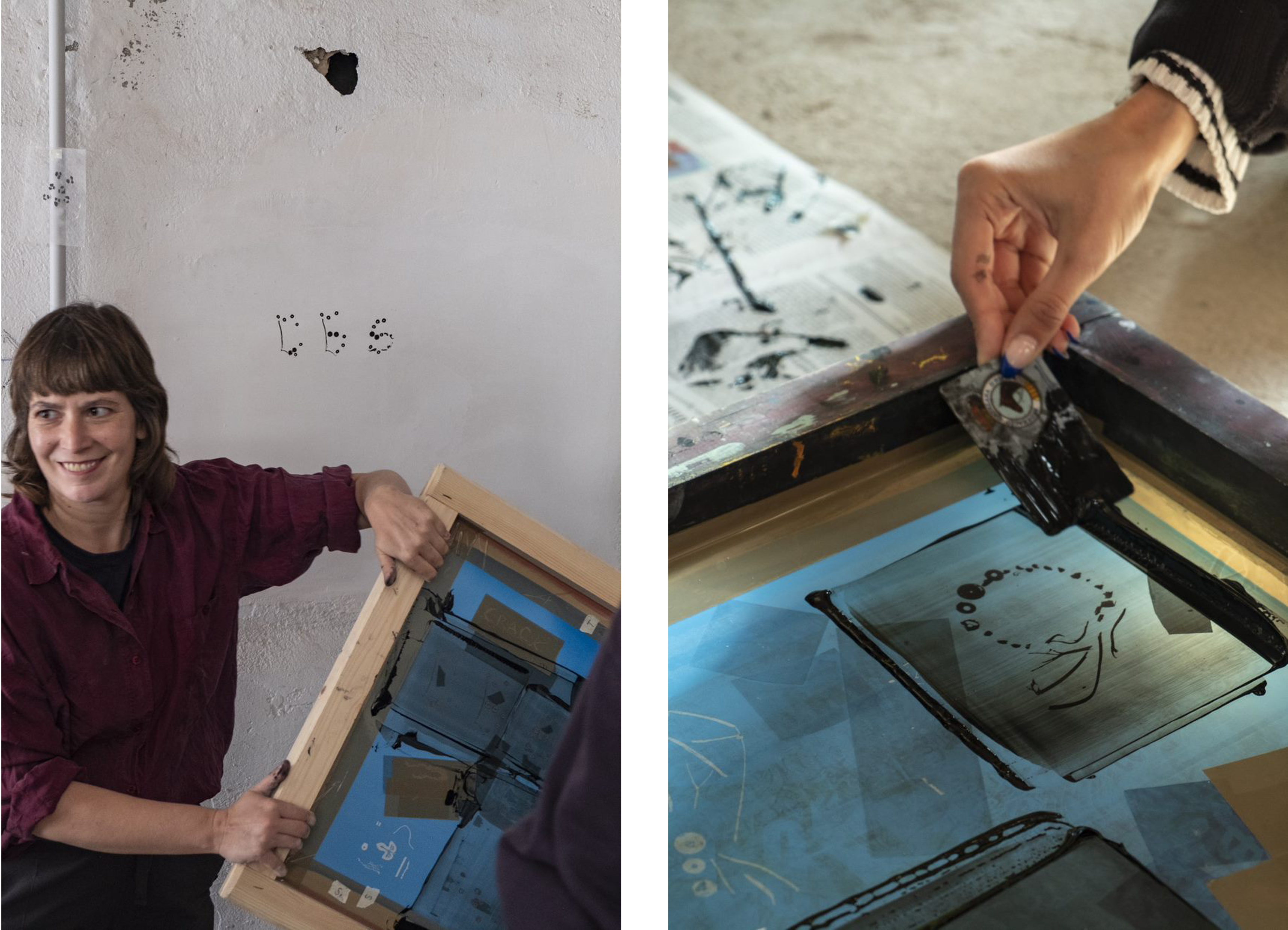 Ambush #3: Julia Spínola, photo by Natàlia Cornudella
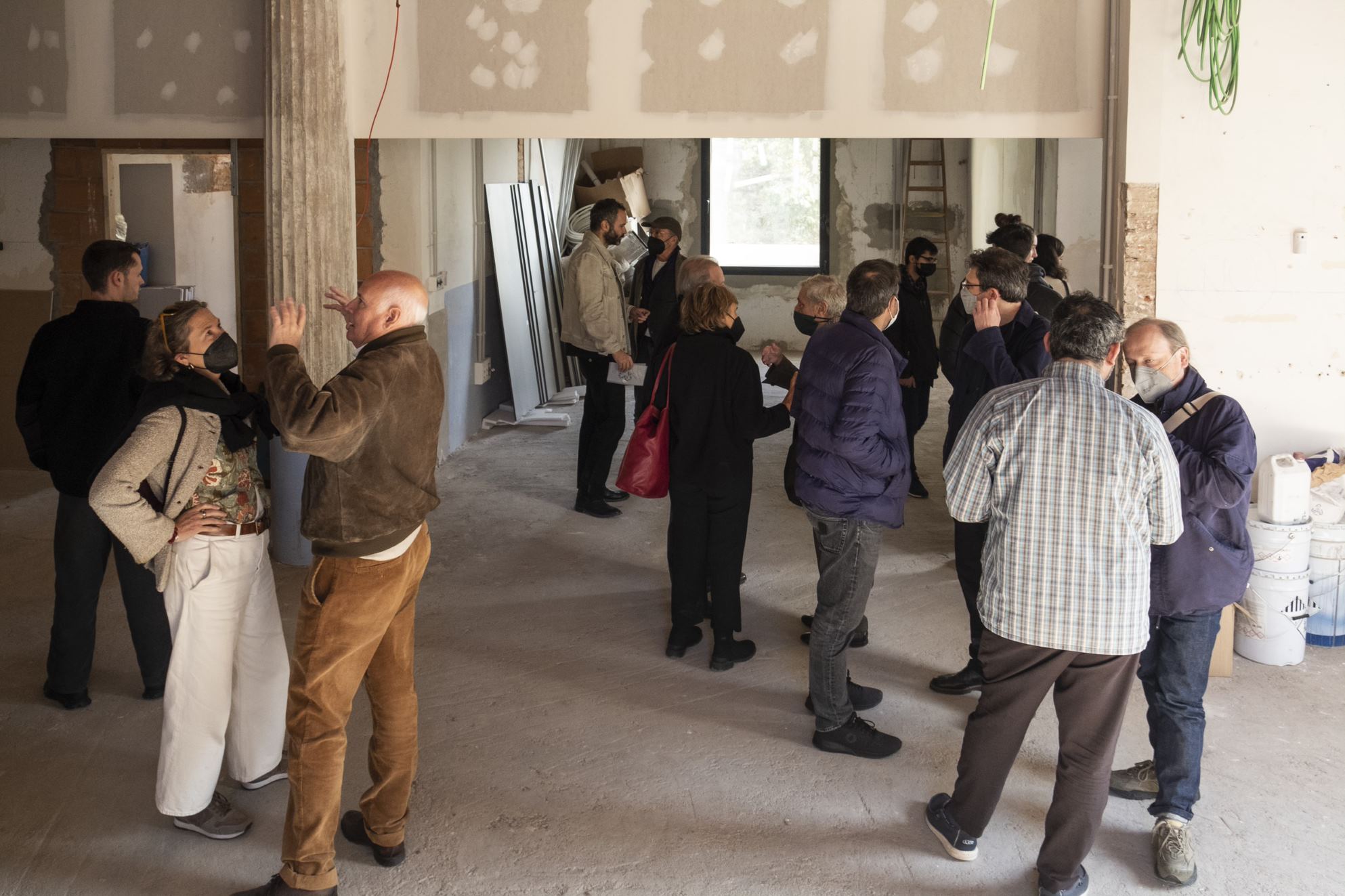 Ambush #3: Julia Spínola, photo by Natàlia Cornudella
 Ambush #3: Julia Spínola, photo by Natàlia Cornudella
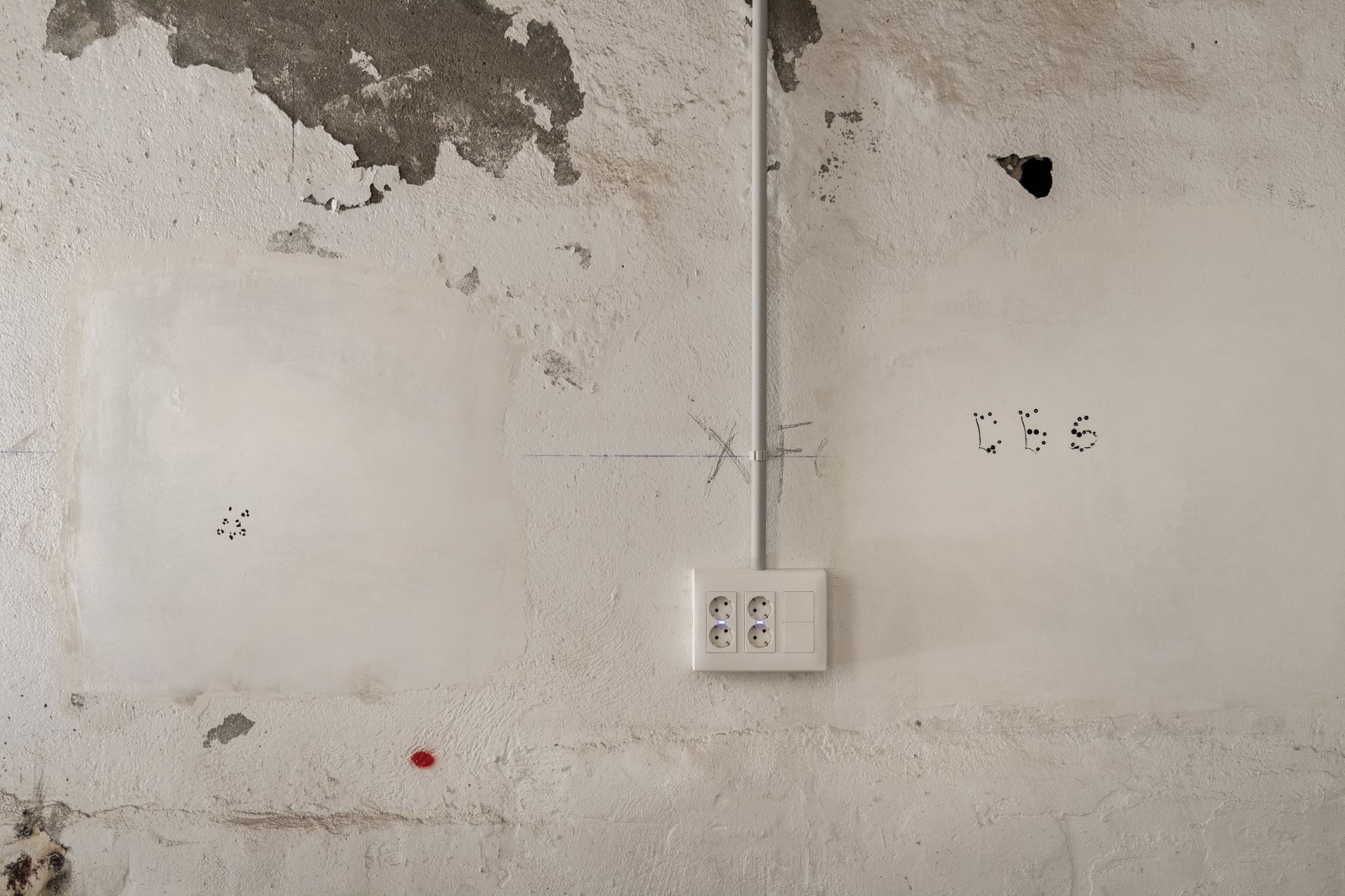 Ambush #3: Julia Spínola, photo by Natàlia Cornudella
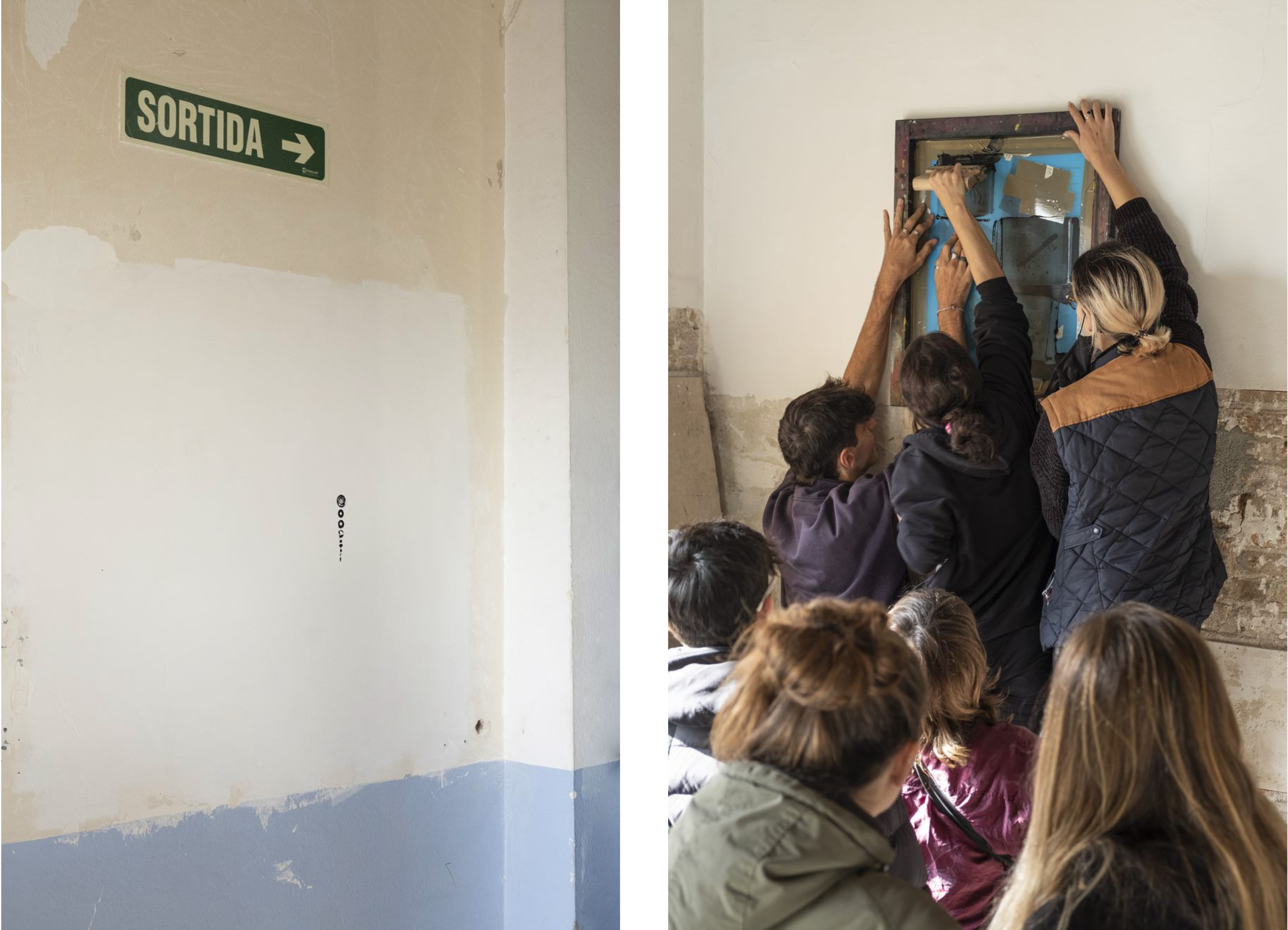 Ambush #3: Julia Spínola, photo by Natàlia Cornudella
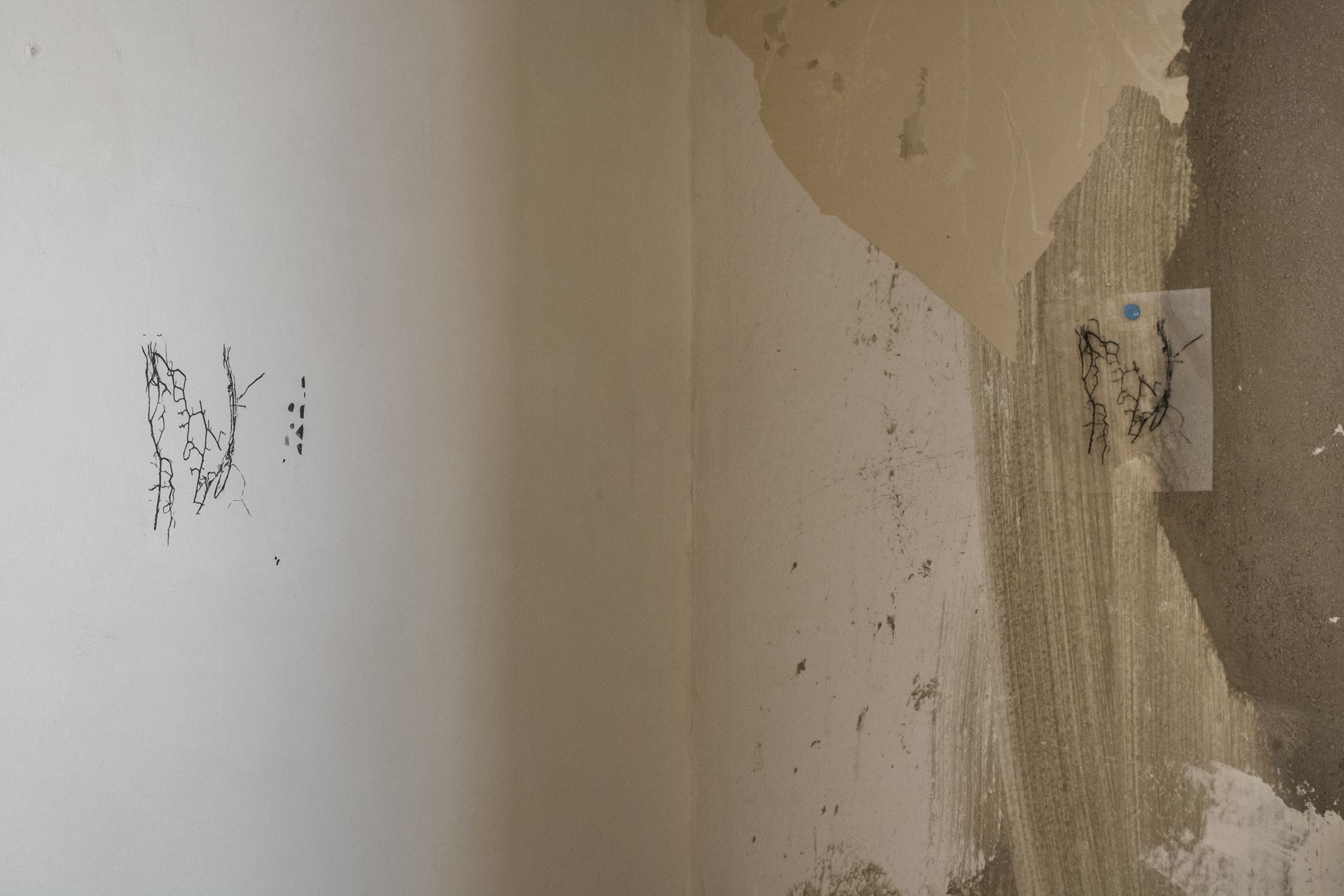 Ambush #3: Julia Spínola, photo by Natàlia Cornudella
Information
Ambush #3: Julia Spínola
+
Gemma Bistrussu, Alèxia Cervera, Alba Espuny, Sofía Fernández, Neo Gamiz, Lucía González, María Gutiérrez, Tono Magrans, Mar Martinell, Julia Pere, Álvaro Pérez, Carla Poch, Bhavna Ruberte, Marrily Ruíz, April Solsona, Alba Tomàs
Date of presentation: Saturday, 13 November 2021 at noon
Location: EINA Bosc - Carrer del Bosc, 2, 08017 Barcelona
More information on the Ambushes program
With the support of: